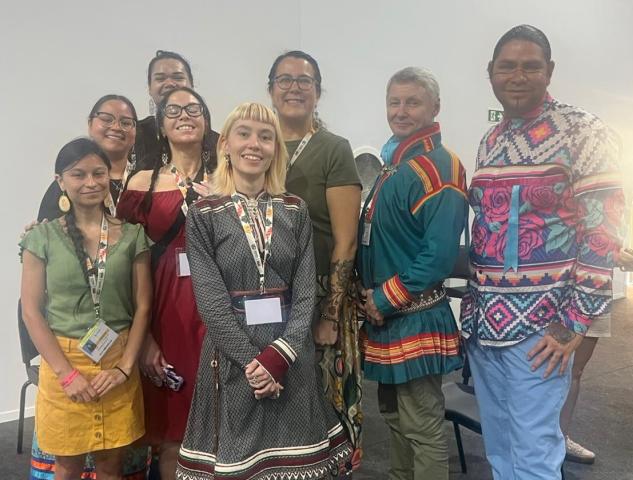
Samantha Miller, a United Church Indigenous youth delegate to COP30, shares her firsthand experiences and challenges.
For International Development Week 2026, The United Church of Canada highlights global partners contributing to the United Nations Sustainable Development Goals through faith-rooted leadership and justice.
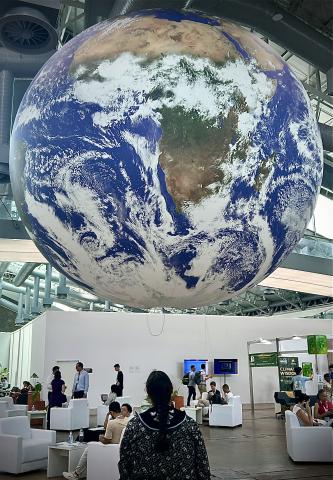
In November 2025, the United Nations Climate Change Conference, COP 30, was held in Belém, Brazil at the doorway of Amazonia. Indigenous Peoples, youth, people of faith, members of social movements, and frontline communities called for climate action rooted in justice, land, water, and right relationship.
Alongside this leadership, powerful interests continued to obstruct meaningful progress—particularly fossil fuel corporations and some government actors closely aligned with extractive industries. These forces enter spaces meant for international climate cooperation, and influence decision makers to prioritize profit over people, and short-term growth over the lives of communities and ecosystems already bearing the brunt of climate disruption.
Canada often presents itself as a global leader on sustainability. Yet its “recent backtracking on previous hard won climate policies, its failure to announce its climate finance commitment, its violation of Indigenous rights and Just Transition principles with its approach to fast-tracking ‘projects of national interest,’ and its limited engagement at COP30” earned Canada the Fossil of the Day award from Climate Action Network International.
At a moment when international cooperation is especially critical, the award brought due attention to the gap between stated commitments and demonstrated action.
"The earth is our ground of being. The earth is our Mother. The earth is our sustenance. The earth is our Eden. Creator made us from our Mother the Earth.”
(Calls to the Church, 2018)
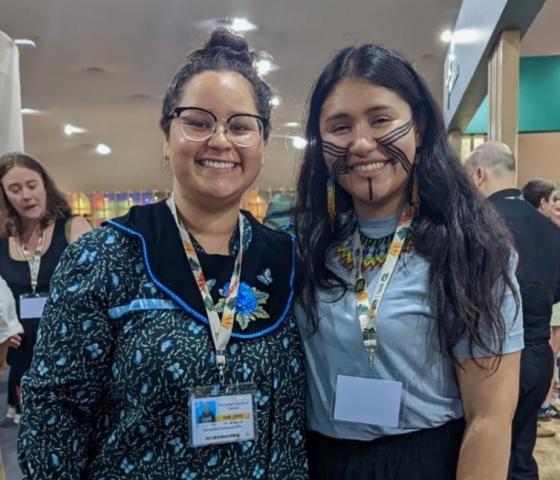
Samantha Miller, a United Church Indigenous youth delegate to COP30, shares her firsthand experiences and challenges:
During my time in the Amazonian lands of Belém it came to my attention that what we call home is a place that we often unconsciously take advantage of. In the quieter moments of COP30, my heart ached at the realization that our very own people here in Canada consider themselves climate change champions, yet the harm of daily lifestyle actions still continues to accumulate unconsciously.
At COP30, I felt the grief of my people, my ancestors, my mother the land, and my heavenly father. All while challenging the barrier of this human reality of disconnection and fleshly ego. Being in Belém was no cakewalk. It was heavy, it was discouraging, it was painful, it was eye-opening and angering.
I come from a community—like many others in Canada and across the world—where the water supply is not healthy to drink naturally, let alone straight out of our taps. Many communities, including my own, have to boil water for it to be considered drinkable. So, you learn the skill and routine of boiling water for your family multiple times a day.
When I travelled to South America, that didn’t change. The water was not drinkable. But this time I was the only one in the household, that I was aware of, who had previously ever had to boil water just to have something refreshing to drink on a hot day. I took on that role, as it has been ingrained in me. Both for the better when I embark on a trail in leave-no-trace camping, and for the worse when my family still lives without the basic human right of free, clean drinking water.
This mirrored what the world is now experiencing. Certain lives are without certain hardships; people grow up provided with basic human rights while others are still diligently fighting for theirs.
This mirroring had me questioning: "Why hasn’t anyone asked why I know how to do this? Why hasn’t anyone else offered to assist?” That’s the world’s problem; no one asks and instead assumes it will be done humanly without taking responsibility.
With this awareness and grief brewing, there was still room that God had provided for me to experience healing moments with my brothers and sisters from across Turtle Island. Within each hug, each tear, each laugh, each look of acknowledgment and comfort, my spirit felt stretched and strengthened.
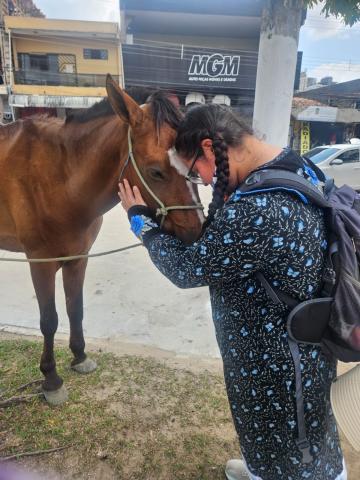
This balancing of the scale of experiences reminded me of the power and grace of God. This whole experience has shown me how our relationship with the land and our creator is disconnected and detached—now more than ever. We as a human race forget to humble ourselves when it comes to Creation. Just as God created you and me, he created the land first.
So I leave you with this: how are you going to honour God and his creation?
(Stay tuned for an opportunity to hear more from Samantha on her broader experience at COP30.)
Connections for Communities of Faith
- Give to Mission and Service to help support Canadian and global partners working towards meeting the Sustainable Development Goals.
- Follow United Action for Justice on Facebook and Instagram, as well as United Church News and the Round the Table blog for more information on how your community of faith can get involved.
- Learn more about the work of Indigenous Ministries by following the Church Indigenous Ministries Facebook page, the Indigenous Ministries webpage, and supporting their advocacy initiatives.
- Join annual COP Animator Circles, which accompany and amplify delegates’ messages before, during, and after COP.
- Email to join future circles in late fall.
- Share A Commitment to Creation Care, a prayer calling us to take action for a sustainable future, and Let Us Work Together and Uplift Each Other, a prayer for building relationships to make change.
- Advocate. Write to your MP to:
- Oppose Coastal GasLink Phase 2 and the Prince Rupert Gas Transmission pipeline projects in northern British Columbia.
- Stand with Indigenous communities facing environmental racism.
- Urge Canada to meet its climate targets and do our fair share.
- Act locally:
- Learn more from Faithful Footprints to make your community of faith more environmentally responsible.
- Read and share the United Church’s latest environmental sustainability report.
- Plan to be part of Together for the Love of Creation Earth Week, from April 19–26 this year.
The views contained within these blogs are personal and do not necessarily reflect those of The United Church of Canada.
Downloads
- Reflection Questions - International Development Week 5 (159.7 KB) (PDF)