
Rev. Dr. Japhet Ndhlovu on the hope-filled transformations that Kenyan communities are leading with Canadian Foodgrains Bank support
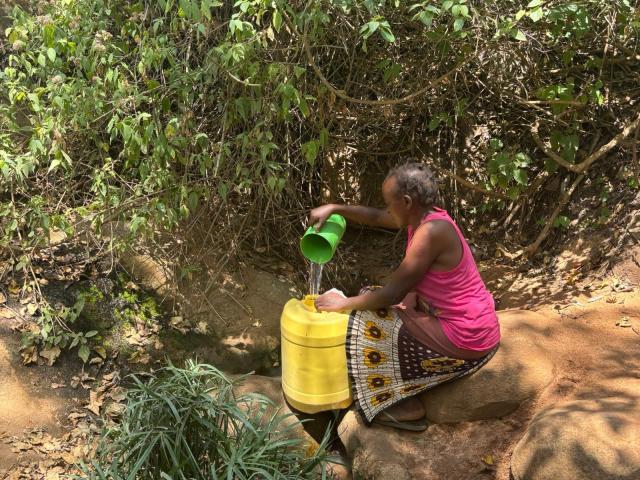
This February, Kenya received a board delegation from the Canadian Foodgrains Bank (CFGB) as a classroom, a sanctuary, and a mirror. On paper, it was a visit to Nature+ programming and projects in Kenya that the CFGB partners with local communities on. In reality, it became an encounter with miracles: springs returning to dry land, seeds waking after decades, and communities reclaiming agency over their own future.
This kind of learning tour is not tourism; it is a pilgrimage into the heart of resilience, where communities are slowly rewriting the story of hunger, climate crisis, and dignity.
Very early on we were reminded that this was not “our” work. The Canadian Foodgrains Bank (of which the United Church of Canada is a member) and its member churches and agencies do not bring solutions to Kenya. They come alongside partners and communities who already carry deep wisdom about land, water, and survival. Our role was to listen, to learn, and to honour what God is already doing among the people and the land.
Each morning began not in a meeting room, but in the Word. Someone read, “I came that they may have life, and have it abundantly.” Suddenly John 10:10 felt less like a verse on a page and more like a prayer over fields, springs, and kitchen gardens.
A powerful reflection drew from Romans 1:20: understanding creation itself as God’s first language, God’s invisible qualities made visible through what God has made. Partners spoke of learning to “be in relationship with nature, not just in harmony with it,” seeing in returning springs and long‑hidden seeds the patience, forgiveness, and generosity of God.
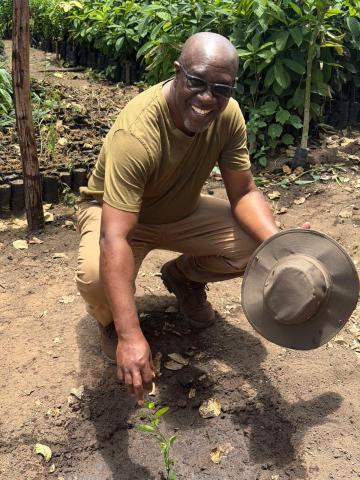
Nature healing, people rising
The Nature+ program in Kenya is simple, but profoundly transformative: hold the soil, slow the water, listen to the community, trust the seeds.
One community decided to “enclose” a degraded area—no cattle, no firewood collection, no cultivation—for a season of sabbath. Within months, native plants began to return, including species elders had not seen for over thirty years. A tiny aster flower signalled the end of the rains; medicinal shrubs reappeared; fodder grasses offered hope to livestock keepers.
Scientists might call this “natural regeneration.” The community called it forgiveness—God’s mercy made visible in the soil bank and seed bank waiting patiently beneath their feet.
At a new sand dam, we saw how families can dig shallow wells along the riverbed and access water much closer to home, rather than walking two to three kilometres each way as they had. Local committees, trained in water and resource governance, now decide together how to care for these shared assets equitably and sustainably.
Women, wisdom, and the courage to change
If the land is being restored, it is often because women have chosen to stand up, speak out, and organize. In village after village, we heard variations of the same story:
“We used to wait for others; now we plan our own projects and approach government officials ourselves.”
“I got trained, and I got trained again—and now I am training others.”
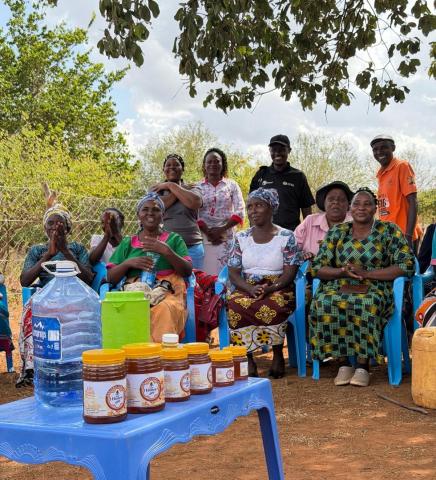
Through Nature+ initiatives like savings groups and kitchen gardens, women are gaining skills, income, and, perhaps most importantly, a voice in household and community decisions. Men told us with pride that they now listen differently at home; that decision‑making about land, crops, and finances is becoming more shared. Youth, too, are being drawn into this movement, getting involved through tree nurseries and beekeeping as innovators, technicians, and entrepreneurs.
Indigenous knowledge and the decolonial turn
Partners spoke about ethnobotany and Indigenous knowledge—how for generations, communities have known which wild fruits nourish, which leaves heal, which shrubs protect springs. Much of this knowledge was dismissed or ignored during colonial and post‑colonial years, when external experts and imported technologies were seen as “modern” and local practices as “backward.”
Now, member agencies and partners are intentionally reversing that pattern. Workshops bring community members, theologians, agronomists, and ethnobotanists together to map local species, record their uses, and co‑design restoration strategies that honour traditional knowledge alongside scientific insights.
This work is deeply theological and profoundly decolonial. When Indigenous knowledge is dignified, when local communities lead, and when outside actors adopt the posture of servants rather than saviours, power begins to shift.
Lessons to carry home
A tour like this only matters if it changes how we live, give, and lead after we return. Several lessons stood out:
Hope is not optional for people of faith; it is a discipline. In a world of climate anxiety and political fatigue, Kenyan farmers quietly practicing conservation agriculture and nature‑based solutions are teaching us to “rejoice in hope, be patient in suffering, persevere in prayer.”
Good development starts with listening. The best projects we saw began not with a pre‑packaged intervention, but with a question: “What do you already have? What do you already know?”
Creation care is not an “add‑on” to mission; it is at its heart. From Genesis’ call to serve and protect the garden, to God’s covenant with “every living creature,” to Christ reconciling all things, the Bible insists that healing land and healing lives belong together.
Decolonization is spiritual work. It demands humility, the willingness to let go of control, and the courage to trust local leadership and Indigenous wisdom.
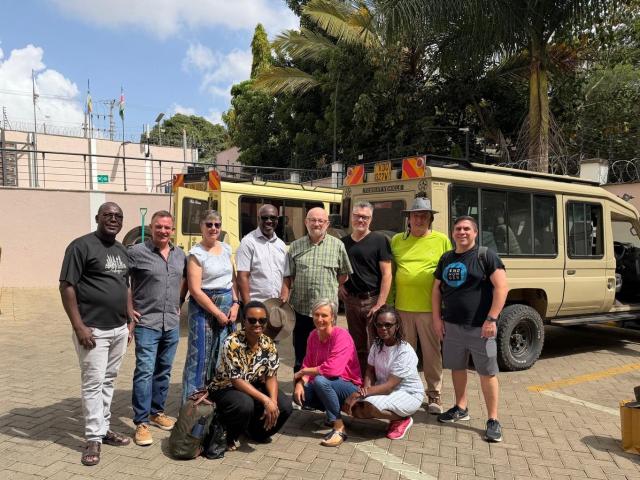
If this Kenyan learning tour teaches anything, it is that transformation is slow, relational, and mutual. Communities in Kitu, Kibwezi West and Makueni are restoring their landscapes and strengthening their livelihoods. At the same time, they are restoring our imagination—about what church can be, what development can look like, and what it means to live as people of hope in a wounded world.
We return home with red dust on our shoes and new stories in our hearts: of a grandmother who no longer only receives but now gives; of a spring that found its way back to the surface after twenty years; of a small group of farmers who, armed with training, faith, and determination, can move governments to repair roads, solarize boreholes, and change policy.
We arrived in Kenya to see projects; we left knowing we had met prophets—people and places quietly proclaiming that another way is possible, and that creation itself is ready to join in the song of abundant life.
—Rev. Dr. Japhet Ndhlovu is Executive Minister, Church in Mission with the United Church of Canada General Council Office, and United Church Representative and Board Member at the Canadian Foodgrains Bank
The views contained within these blogs are personal and do not necessarily reflect those of The United Church of Canada.