Natalia Cabrera Guerra on the transformative resilience she witnessed in Kenya on the 2025 Pilgrimage of Learning
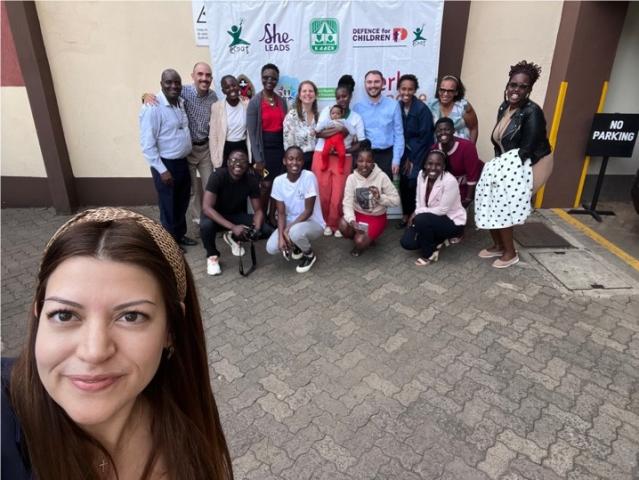
Coming from Colombia, Kenya felt like home the moment I landed in Nairobi. As we drove through the city toward the hotel, the energy of the streets, the warmth of the people, the spontaneity of the conversations, and even the organized chaos of traffic reminded me instantly of my own country. There was familiarity in every gesture, every smile, every sound.
At roadside food stalls, informal markets, and police road checks, I recognized the mix of struggle and hope. Even reading the local newspaper, its stories of corruption, resilience, and political tension, felt like reading a Colombian paper.
Another reason this journey felt so personal is because my experience within The United Church of Canada has been rooted in First Third Ministry, accompanying people in the first third of their lives: children, teens, and young adults. Because of this, I felt an immediate and deep connection with the children and youth I met in Kenya. Seeing their leadership, their confidence, their joy, and their courage in the face of challenges touched me in a way I wasn’t expecting.
A biblical passage kept echoing in my mind that in Kenya felt more like real life than scripture:
“Let the children come to me, and do not hinder them, for the kingdom of heaven belongs to such as these.” (Matthew 19:14)
Organizations Shaping Kenya’s Future
One of the most powerful elements of the pilgrimage was engaging directly with organizations that have been pillars of justice and community development for decades. These included the All Africa Conference of Churches, the Organization of African Instituted Churches, the National Council of Churches of Kenya, the Kenya Alliance for Advancement of Children’s Rights, and PROCMURA, an initiative that trains youth from different faith traditions to become leaders of peace and dialogue.
Each organization carries a unique purpose, yet shares a common vision: strengthening communities, protecting children, empowering youth, building peace, and ensuring that justice flows through society like a river. Their work is authentically African, rooted in their own stories, their own theology, their own communities.
Kisumu: Lessons From the Land
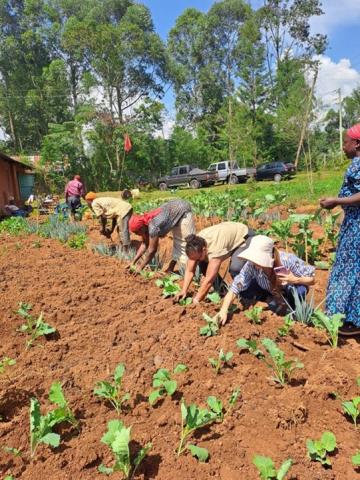
Traveling across Kisumu County and surrounding regions, I witnessed the ways communities work with the land, sometimes fighting against drought, sometimes working with nature to survive.
I learned about plants used as natural pesticides, a powerful example of traditional knowledge shaping modern sustainability and food conservation. I watched how cassava, sweet potato, corn, and potato are transformed into flour, a process simple in appearance, but deeply important for food security. These communities don’t speak about resilience—they embody it.
We also visited a Muslim comprehensive school filled with children who reminded me so much of the young people I’ve accompanied through First Third Ministry. Their laughter, their curiosity, their hunger to learn, it struck me deeply. The classrooms were modest, yet their spirits were immense.
Education here is a lifeline. A promise. A path toward a better future. And witnessing Christian and Muslim communities support each other in this work reminded me of what faith can do when it is grounded in love and unity. We played a friendly soccer match, and I felt part of the children!
Kitui: Water, Drought, and the Miracle of Survival
Nothing prepared me for Kitui, one of Kenya’s most arid regions. Life here revolves around water, not just as a physical need, but as a spiritual symbol. Water is survival. Water is community. Water is dignity. Water is justice.
In Kitui, I saw how communities collect rainwater in small dams and tanks, how they mulch to preserve humidity, how they plant drought-resistant crops like millet. Every drop is precious. Every drop is hope.
A large water tank, donated in 2024 with support from the Canadian Foodgrains Bank and The United Church of Canada, bore the words of Jesus from Matthew 25:35: “For I was thirsty and you gave me something to drink.” Standing before that tank felt profoundly spiritual. It was scripture transformed into infrastructure. Faith turned into hydration. Theology turned into life.
Transforming Agriculture
Among all the initiatives we saw, the work of the Canadian Foodgrains Bank was particularly inspiring. Their programs do more than alleviate hunger, they build long-term food sovereignty.
Through the Nature+ Program, farmers are restoring soils, regenerating landscapes, diversifying income through beekeeping and gardens, empowering women, and building climate resilience across Kenya and beyond.
These were not just statistics; I saw the faces, the hands, the fields, and the transformation.

Every moment in Kenya strengthened my belief that resilience is not an idea, it is a daily practice of hope.
What moved me most was hearing people say that even when program funding ended, they were grateful because what they learned could not be taken away. It brought to mind the wisdom that true compassion is not only giving the fish, but teaching how to fish. In Kenya, I witnessed this wisdom in action. Knowledge was multiplying. People were teaching one another, creating new solutions, and becoming stewards of their own future.
When the pilgrimage ended, I felt like I was carrying Kenya with me—its people, its hope, its courage, its landscapes, its faith. It reshaped how I see community and global solidarity. It reaffirmed my belief in the transformative power of supporting children, youth, and families. And it deepened my commitment to accompany communities, both locally and globally, in the spirit of compassion and partnership.
Asante Sana, Kenya. Thank you for welcoming me. Thank you for teaching me.
—Natalia Cabrera Guerra is a Colombian woman rooted in family, faith, and connection. Having left Colombia in 2014 due to violence, she now calls British Columbia home. A proud mestiza with Indigenous and Spanish heritage, she believes cultures don’t compete, they complete one another. Devoted to children and older adults, Natalia leads through service, inspired by the unconditional love Jesus taught, believing that healing begins when we truly care for one another.
Read more about the 2025 Pilgrimage of Learning in Kenya from Sherri Fowler and Christopher Fraser.
The views contained within these blogs are personal and do not necessarily reflect those of The United Church of Canada.