How one house in Korea helped remodel The United Church of Canada
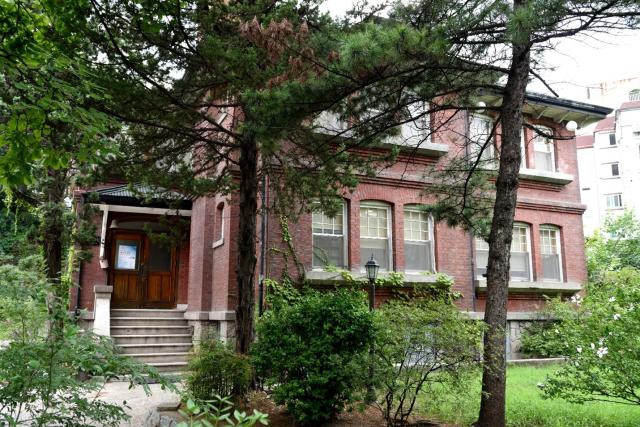
As The United Church of Canada celebrates its 100th year anniversary, we can reflect and appreciate the ways we have been profoundly transformed. One moment of transformation centred around a little-known property in another part of the world, in Seoul, South Korea.
A stately missionary residence built in 1921, near the Great West Gate of Seoul (Seodaemun), loomed over the neighbourhood. The house had been converted in the subsequent decades into a mission training school and seminary, where the living and dining rooms alone were spacious enough for about 80 students!
In the 1970s, this property became a source of contention, and what ensued would profoundly change both The United Church of Canada and the Presbyterian Church in the Republic of Korea (PROK).
This is the story of how a single house came to remodel two churches.
To bring this story to life, Rev. Won Hur, United Church Global Partnership Coordinator for Asia, interviewed Professor Rev. David Kim-Cragg, whose book Water from Dragon's Well: The History of a Korean-Canadian Church Relationship won the 2023 Book Prize from the Canadian Society for the Study of Religion. Watch a clip from the interview below, and the full interview at the bottom of this page.
Early Roots in Korea
The relationship between the Canadian church and the church in Korea stretches back to the late 1800s, when Presbyterian missionaries planted congregations, established schools, and built hospitals in northern Korea.
From 1910 to 1945, Korea suffered brutal colonialism under Japanese annexation, and the church fought for independence and freedom. Then came the Korean War, from 1950 to 1953, which further left the country traumatized and impoverished. Starting in the 1960s, Korea was ruled under brutal dictatorships, and once again the church was at the forefront of freedom and democracy. The PROK brought this conviction of freedom and spirit of independence to its relationship with the United Church, who was not only their partner but also its wealthy benefactor.
“The house became a symbol of the kind of material division between the missionaries and Koreans… So it was very much a symbol of colonialism.”
— Rev. Dr. David Kim-Cragg
Frustrated with the power imbalance they found themselves in, PROK began to insist on mutuality in ministry as brothers and sisters in Christ. The conversations then turned to the three properties the United Church owned in Korea, including the Seodaemun house in downtown Seoul. PROK asked the United Church to transfer the property over to them under their vision and stewardship.
In the late 1960s, the United Church noticed that the denomination had begun to shrink. In the 1970s, they began to think about recovering their overseas assets and bringing the funds back to Canada. The collision occurred in 1971, when the United Church and PROK began high-level discussions about the properties, raising both questions and contentions.
Finally in 1974, after lengthy negotiations, the United Church agreed not to sell the properties, including the Seodaemun house, but to hand them over to the PROK. It was a groundbreaking decision that transformed both denominations.
An Underground Seminary for Liberation
The PROK used the Seodaemun house to establish an underground theology school which became a centre of Koreans’ own liberation theology, known as the Minjung theology. It was also used to train a new generation of leaders and human rights activists during the time of military dictatorship and martial law.
“He would make an underground seminary for students who were getting kicked out from school, and other professors who were losing their jobs… They came together around this community and started working to oppose the government and raise awareness about what was happening in Korea.”
— Rev. Dr. David Kim-Cragg
It did far more for the kingdom of God than it ever could have as a residence for two United Church missionaries.
Reconciliation in the Living Room
When PROK representatives first entered the building after the transfer, they were shocked—not by its grandeur, but by its simplicity. The missionaries had been living far more humbly than Koreans had assumed. The moment became one of unexpected reconciliation, healing, and renewed trust.
Furthermore, the PROK was also given more independence and agency in its global partnership with the United Church. It was a truly groundbreaking moment for both denominations.
In the aftermath, news of transferring the property to the PROK remained eerily quiet in the United Church. It may have been seen as an embarrassment, with PROK viewed as the winner and the United Church as the loser in the transaction. What was not proclaimed at the time was that ultimately, the property did not belong to the United Church; rather, it belongs to God—to serve the needs of the people who were struggling for human rights, democracy, and justice. Both denominations now understand that when it comes to doing God’s work, we are truly united as one with global partners.
A Legacy Carried Forward
The Korean church still cherishes the Seodaemun building—and the South Korean government has designated it a protected historic site.
Ultimately, the PROK and the United Church acted admirably, compassionately, and prophetically. In a sense, the old home remodelled both denominations: it brought the blessing of true partnership. This began the process of decolonization of the United Church, towards mutual radical accompaniment with its global partners. We have become a much more authentic church. Thanks be to God.
“When the partnership is genuine, then both sides are transformed… The Canadian missionaries changed lives in Korea, but they themselves were changed by that relationship.”
— Rev. Dr. David Kim-Cragg
In the decades since, the impact of the 1974 decision has only deepened:
- PROK is now considering building its new church headquarters on the Seodaemun property.
- The PROK has also made a generational donation to the United Church to purchase a stained-glass window for its new headquarters opening in 2026.
- The United Church has since transferred its properties in India and Japan to local partners under similar principles of mutuality.
- PROK leaders have, in turn, shaped the United Church in profound ways: The Very Rev. Dr. Sang Chul Lee became the 32nd Moderator of the United Church, and The Rev. Dr. Hyeran Kim-Cragg became Principal of Emmanuel College.
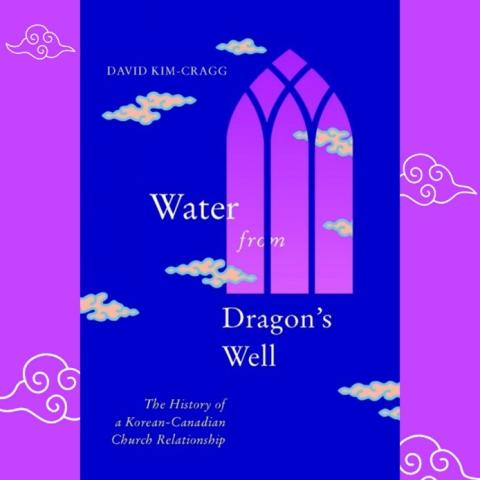
Much of this history is beautifully documented in Water from Dragon's Well: The History of a Korean-Canadian Church Relationship. The book received the 2023 Book Prize from the Canadian Society for the Study of Religion for its outstanding contribution to the study of religion and intercultural history.
Reflect
- What difference might it make if we understood our money, property, and resources as belonging not to us, but to God?
- Has there been a time when your gift made a profound difference in someone’s life? How did that experience shape you?
The United Church’s forebearers gave generously in ways that reshaped lives, churches, and societies around the world. That legacy continues today through Mission and Service. If you feel called to join in God’s work of mending the world, please consider giving to the Mission and Service Fund.
You can view the full interview with Rev. Dr. David Kim-Cragg below.
—The Rev. Won Hur is Global Partnership Program Coordinator, Asia, in the Church in Mission Unit, at The United Church of Canada's General Council Office. Conor Russell is the Sustainable Development, Impact and Reporting Program Support with the Church in Mission Unit of the General Council Office.
The views contained within these blogs are personal and do not necessarily reflect those of The United Church of Canada.