
Rev. Dr. Emmanuel Tehindrazanarivelo reflects on Black History Month, and the poison of racism in the history of the Christian church.
February is upon us. The shortest and coldest month in Canada, it is also Black History Month. In 1995, February was officially declared Black History Month in Canada.
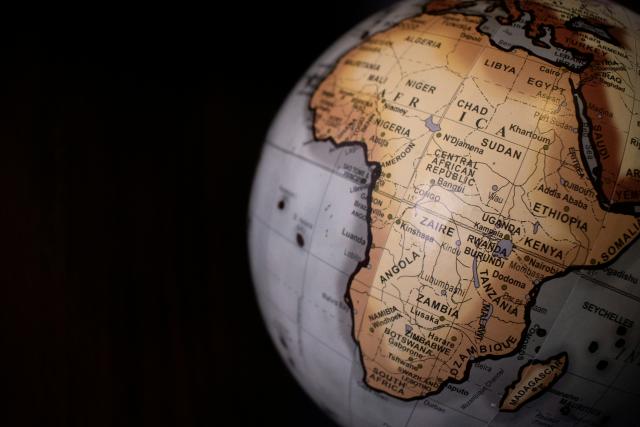
This turns our attention to Africa, the continent that is the cradle of humanity and civilization. Eight years ago, I was in Addis Ababa, at the National Museum of Ethiopia. I was gazing at Lucy, an early hominin considered to be the grandmother of humanity. My thoughts then took me back to the time I travelled to Egypt and visited the Coptic community at the monastery of Wadi El Natrun, where both the geography and the monks bear witness to the beginnings of Christianity. Standing there, images and questions flooded my mind. Anger and tenderness mingled, taking me back to my research in history, theology, and the Bible I undertook in preparing my dissertation.
This backward glance shocks me, as it highlights the denial of Africa and its contribution to the forward march of humanity. We must recognize that in our current society, racism is making a strong comeback and becoming increasingly normalized. It is with good reason and conviction that our communities of faith have recently spoken out strongly against racism and that we have chosen to be an anti-racist Church. Tremendous courage and unwavering leadership are required in the titanic battle against the onslaught of hatred and discrimination. The hydra has emerged from its lair. Racism is foremost an attack on humanity, and Africa and Africans are systematically its main victims.
We must admit that racism against Africa and Africans is deeply rooted in our theology, in the history of the Christian church, and in our spirituality. Ostracism and marginalization are evident when studied objectively. How many of us are aware that the early church was originally African, before being Roman? Think of such founding theologians as Origen, Tertullian, Athanasius, Augustine, Mark (after whom the Gospel is named), Pachomius, Moses the Black, to name but a few, along with the mothers of the Church such as Monica. Think of monasticism. I leave it to you to expand the list.
If we look to the holy scriptures, Africa, before becoming a land of servitude, was first a land of welcome and refuge. Consider Abraham and Sarah, Joseph, his father Jacob and his tribe, Moses, Jesus and his family, not to mention the Church of Ethiopia and Nubia.
Furthermore, when we talk about ancient Egypt, and its great pyramids, the narrative tends to minimize or even erase the contributions of the black pharaohs who led Egyptian civilization to the height of its splendor. How often have you heard anyone mention the pyramids of Nubia?
Should I join others in saying that racism is in the DNA of Christianity? No! However, it is important to recognize and admit with humility that racism has poisoned Christianity.
Our church, The United Church of Canada, which has decided to be an anti-racist church, is committed to freeing itself from this cancer that poisons our relationships and institutions. Let us continue to drink from the truth and the gospel’s living source, Jesus Christ, refugee in Africa.
The celebration of Black History Month and the church's request for forgiveness for its involvement in enslavement and colonization signify our willingness, as the United Church, to press forward in our fight against racism.
In this struggle, we rediscover the common sources of our humanity. Let us reframe our readings, our historical and theological narratives, and conform to the truth that sets us free.
In our second century and Toward 2035, we cannot ignore this, let alone dismiss it.
Together, let us walk toward and in the light of the Morning Star.
—Rev. Dr. Emmanuel Tehindrazanarivelo is the Responsable of the Ministries in French for the General Council Office of The United Church of Canada.
The views contained within these blogs are personal and do not necessarily reflect those of The United Church of Canada.