
The United Church partners with Cosmopolitan Affirming Community, who provide spiritual support and mental health care for LGBTQIA+ Africans
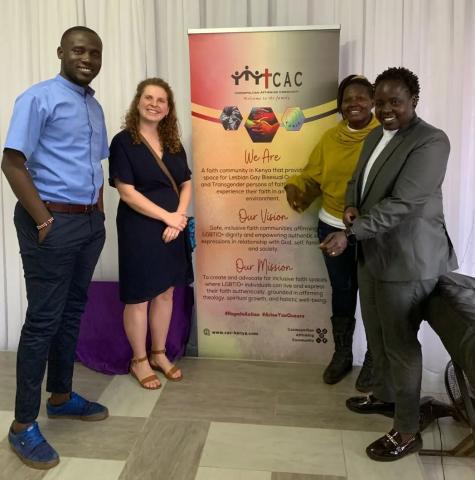
For LGBTQIA+ people in many parts of the world, faith is both a source of deep comfort and a site of painful contradiction. Churches that once nurtured spiritual belonging can become spaces where identities are questioned, condemned, or erased. In Kenya, the Cosmopolitan Affirming Community (CAC) is working to change that reality. Through pastoral accompaniment, practical care, and advocacy, CAC has created a radically inclusive faith community where LGBTQIA+ people can rediscover both their dignity and their faith.
A new partnership between The United Church of Canada and CAC represents a powerful expression of global partnership and solidarity, walking alongside LGBTQIA+ people of faith in contexts where exclusion and vulnerability remain daily realities.
CAC was founded in 2013 by a small group of believers who believed another way was possible. They refused the idea that LGBTQIA+ people must choose between their faith and their dignity. What began as a small gathering has grown into a community committed to healing, justice, and transformation.
Caroline Omolo, CAC’s Presbyter and Senior Pastor, says that CAC’s work extends far beyond spiritual affirmation. Many LGBTQIA+ people in Kenya face overlapping crises, including homelessness, hunger, violence, and displacement. Many people arriving at CAC carry trauma linked directly to religious condemnation.
Recognizing this, CAC integrates mental health care with spiritual support. Group therapy sessions facilitated by mental health professionals are offered alongside pastoral accompaniment from affirming faith leaders. Healing circles bring together LGBTQIA+ youth and refugees from across East and Central Africa to share stories, pray, and reflect on scripture, through a lens of dignity rather than shame.
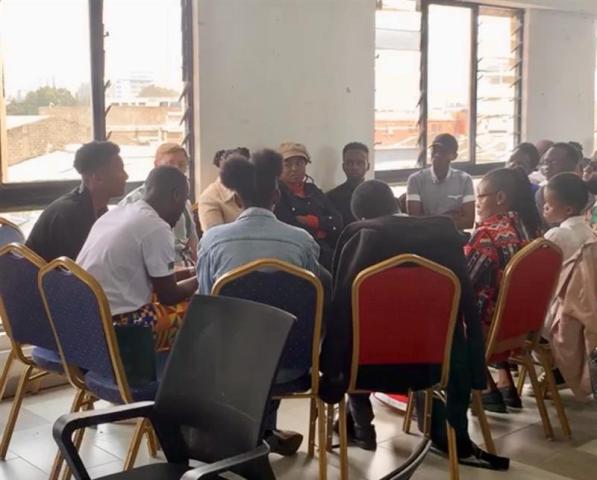
“Through this partnership with The United Church of Canada, CAC is strengthening safer spaces where practical support and pastoral care meet. Community members can access counselling, food assistance, emergency shelter referrals, healing circles, and peer support.” said Omolo.
In these circles, participants often rediscover that faith can be a source of resilience rather than harm. For some, healing is simply having their basic needs met. For others, it is about how accompaniment begins with practical compassion, meeting people in moments of crisis, and helping rebuild stability and hope.
For one young LGBTQIA+ Kenyan, finding CAC came after being rejected by family and losing stable housing.
“I was told that God did not love people like me. When the rejection came, I lost my home and slept wherever I could. But at CAC they welcomed me with open arms. Today I am strong and have the will to live and thrive because I found family and a place to call home,” she said.
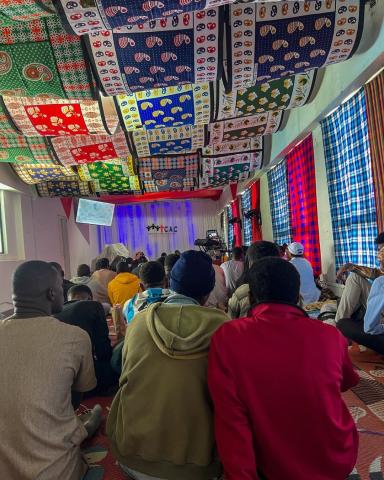
CAC also engages in dialogue with church leaders, theological institutions, and interfaith networks to challenge the narrative that religion must be hostile toward LGBTQIA+ people. Workshops and dialogues with faith leaders and theology students encourage deeper reflection on scripture and pastoral care. In many cases, these conversations begin small, but they have the potential to reshape how future church leaders understand inclusion.
Global Solidarity and Shared Witness
Supporting this work is part of The United Church of Canada’s broader commitment to 2S and LGBTQIA+ justice and accompaniment. Through partnerships with communities like CAC, the church seeks to embody Christ’s presence in neighbourhoods and across the world, especially in places where people experience layered crises of exclusion, poverty, and violence.
This work reflects the church’s strategic commitment to accompany communities of faith as they embody affirming practices that lead to healing, wholeness, and fullness of life, while strengthening coordinated church and global advocacy to challenge discrimination and advance 2S and LGBTQIA+ rights within the church and worldwide.