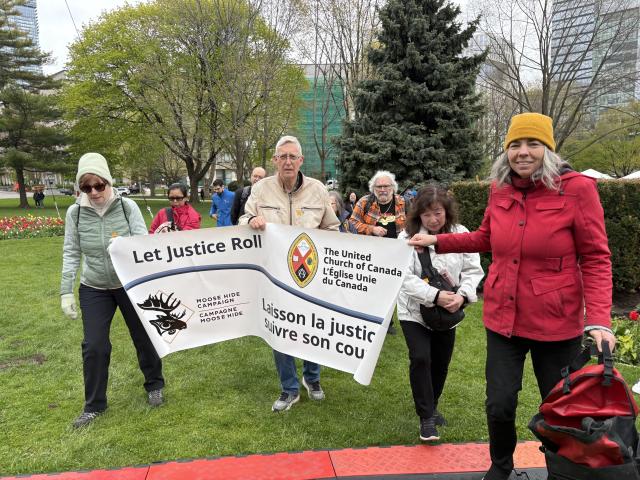
The rally in Toronto drew attention to the crisis of violence against Indigenous women, girls, and members of the 2S and LGBTQIA+ community

The 15th Moose Hide Campaign Day was held across the country on May 14, 2026—deliberately close to Mother’s Day. The campaign draws attention to the need to address violence against women, girls, and members of the 2S and LGBTQIA+ community. For the first time the primary national event, which originated in British Columbia, was held in Toronto. Following a sunrise ceremony and sacred fire lighting at the Native Canadian Centre of Toronto, guests attended a moving and informative Opening Plenary and Fasting Workshop at the Royal Ontario Museum.
Paul Lacerte, who cofounded the campaign with his daughter, Raven, explained how the idea for the campaign emerged from a period of fasting followed by a moose hunt. Attending a National Native Women’s organization meeting about violence against women, Lacerte was astonished to find himself one of only four men present among some 350 people. He saw a need to call men to take up responsibility for addressing what he described as an epidemic of violence, especially intimate partner and close family member violence, in Canada. While the campaign’s growth—from a father-daughter conversation to events across Canada engaging over 350,000 participants—is inspiring, the ongoing high incidence of violence remains a sobering reality.
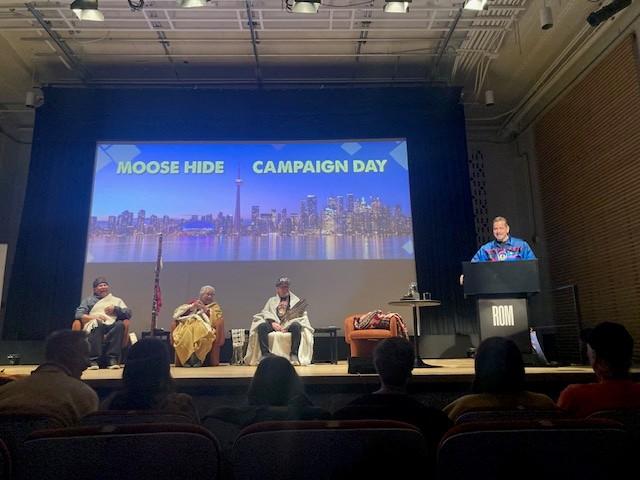
Dr. Niigaan Sinclair offered a keynote address. He drew the link between violence within the Indigenous community to the effects of colonization and residential schools. He observed that the most difficult conversations at the Truth and Reconciliation Commission (TRC) national events which he attended with his father, Justice Murray Sinclair, Chair of the TRC, were not those between church members and survivors of residential institutions, as one might expect. They were among family and members of communities where perpetrators reside, the legacy of abuse experienced in the schools.
Dr. Sinclair, event moderator Bob Goulais from Nipissing First Nation in Ontario, and three Indigenous Elders all spoke to the ways in which Indigenous peoples are using cultural teachings and ceremonies with their young people, and especially young men, to teach them how to live respectfully and how to love each other fully as human beings. They shared stories of learning from how animals, such as the moose, live peaceably with each other and care for each other. Lacerte explained that fasting was chosen as the ceremonial aspect of Moose Hide Day as it was perhaps one of the most common types of spiritual disciplines among the various Indigenous traditions across Turtle Island, and among all people of faith.
At noon, the Moose Hide program moved to Queen’s Park, in front of the Ontario Legislature, for the Rally to End Violence. Hundreds gathered in person and more joined online through a national livestream to stand, to listen, and to come together towards the collective goal of ending gender-based violence. Bob Goulais hosted the program, which had several highlights.
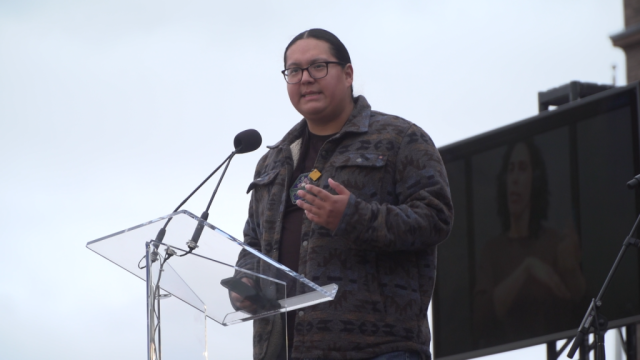
Youth leader Theland Kicknosway issued a reminder to the crowd that this work begins with a question, and then requires putting one foot in front of the other, as he has. His question, as a nine-year-old, was one he posed to his mother: “Where do all the children of the missing and murdered women go?”
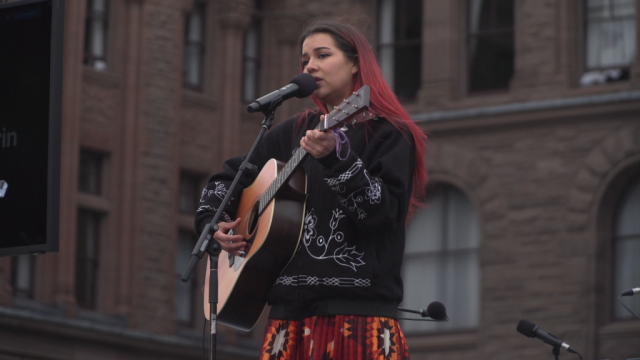
Anishinaabe kwe musician and songwriter Natasha Fisher shared her song, “Where Do We Go?” inspired by the heaviness of loss of missing and murdered Indigenous women and girls. Lyrics from the song included:
"She stands both feet on stolen ground/She’s speaking loud/They don’t hear a sound and it’s deafening.
She’s seeking round for her safe and sound/They play lost and found on ancestral grounds/They’re not listening.”
Onstage with her family, Acting Executive Director of the Moose Hide Campaign Kathryn Lacerte drew attention away from the headlines and instead to the positive changes that have come when individuals stop, reflect, and choose a different path. She cited the police calls that didn’t come in, the argument that stopped before it became abuse, the person who walked away instead of causing harm. As she said, the work of the campaign is founded on the belief that people can and do change, and that these stories matter.
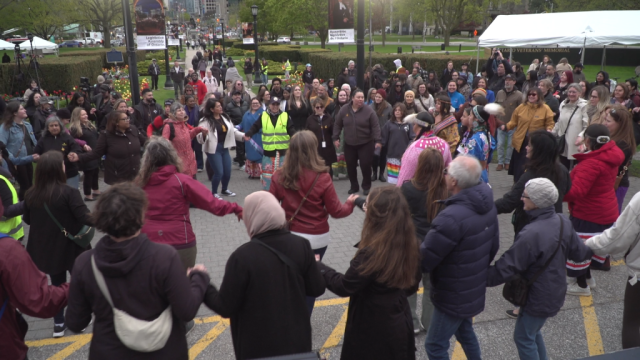
As the program moved to a close, all were invited to join in a round dance led by the jingle dress dancers. In the round dance, warming hearts, minds, and bodies met each other, dancing to the drum while moving towards connection, conversation, and responsibility. The day concluded with a feast at the Native Canadian Centre of Toronto, where participants broke their fast.
Explore the Moose Hide Campaign website for videos of these events and news of additional events and programs across the country, as well as resources to continue to stand against violence toward Indigenous women, girls, and 2S and LGBTQIA+ people.