At Faith Beyond Borders, Rev. Dr. Japhet Ndhlovu witnessed the quiet, powerful work of those refusing to let the church be a place of death
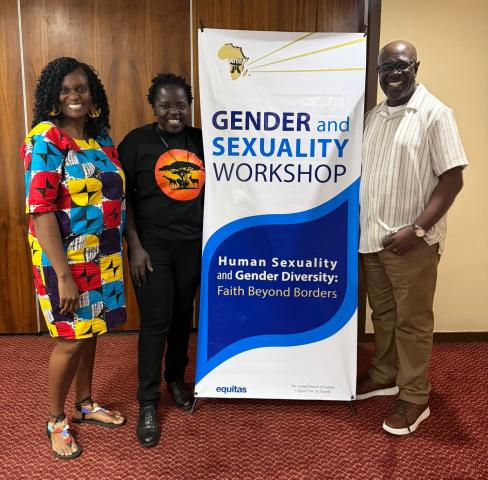
Two years ago, myself and a small gathering of faith leaders and activists sat in a circle in Maputo, Mozambique and dared to say words many of us had only ever whispered. The All Africa Theological Education by Extension Associate was hosting the first Faith Beyond Borders consultation on Human Sexuality and Gender Diversity in the African church context.
We named theological exclusion. We named the harm done in the name of God to LGBTQIA+ people across this continent of Africa. We went home changed—not enough to transform everything, but enough to keep going.
This month, I came back. The seed we planted in 2024, watered through regional workshops in Johannesburg and Nairobi, has not merely survived the African sun. It has become a tree. We are no longer just defining terms and defending ground. We are building something. That is the most exciting thing I have witnessed in a long time.
The workshop brought together participants from Mozambique, Zambia, South Africa, Botswana, Kenya, and Zimbabwe—faith leaders, activists, theologians, pastors, queer persons of faith, parents, and allies. Three full days of sessions, group work, storytelling, and precious conversations. It was not a conference. It was a community finding its voice.
We are no longer just defining terms and defending ground. We are building something. That is the most exciting thing I have witnessed in a long time.
Naming the Silence
What moved me most was the tone in the room. In 2024 there was tentativeness; a looking-over-the-shoulder quality that comes when a conversation is genuinely dangerous. Since then, something shifted. People spoke more freely, more boldly. One participant from East Africa described LGBTQIA+ members of her congregation who sing in the choir, greet at the door, and give faithfully, while the church publicly denounces who they are.
"We preach against them from the pulpit," she said quietly, "and then ask them to usher the following Sunday."
The room sat with that. There are no easy answers. But naming reality is the beginning.
Reading the Bible Honestly
The second day was theologically dense, but incredibly liberating. My presentation on life-affirming hermeneutics addressed the so-called clobber passages: Genesis 19, Leviticus, Romans, the Pauline letters. I watched faces change as the Sodom narrative was reread not as a text about homosexuality but about the failure of hospitality and the weaponization of sex as domination.
If the fruit of our theology is death, we do not need to defend the theology. We need to examine the roots.
I watched eyes widen at Isaiah 56, where God promises the eunuch, the gender-variant figure of the ancient world, "a monument and a name better than sons and daughters."
It was the fruit test that carried the room: if our interpretation of scripture produces depression, family rejection, spiritual abandonment, and suicide, what does that tell us about the health of our interpretation? If the fruit of our theology is death, we do not need to defend the theology. We need to examine the roots.
During the tea break, an activist who had come in quietly resistant told me she had never heard the Sodom text read that way. "But if I'm honest," she said, "I always felt something was wrong with using that story the way we use it."
That is not a conversion. That is a crack. Cracks let in light.
Intersectionality and the Cha-Cha-Cha
I was moved by the third morning's session on feminist spirituality and intersectionality. The argument that liberation is never single-issue, that the struggle for LGBTQIA+ dignity is inseparable from the struggle for women's dignity, for the poor, for the decolonisation of the African mind, is the theology I believe in. You cannot free part of the body and leave the rest captive.
One of our colleagues described advocacy progress like the cha-cha-cha dance from Zimbabwe—five steps forward, three steps back, but always moving. Long-term transformation is not a straight line.
Organizations on the Ground
What fills me with genuine admiration is the quality of those doing this work, colleagues from Ujamaa Centre, from the Inclusive and Affirming Ministries, from Lambda in Mozambique, from Cosmopolitan Affirming Community in Kenya.
They facilitate processes in hostile church spaces, they accompany queer persons of faith who have been told God does not love them, and train facilitators so the work outlasts any one organization. All while navigating an anti-gender movement that is growing, well-funded, and spreading. When we learned this week that a major family values conference is planned for Cape Town in 2027, our colleagues' response was not panic. It was strategy. That is what mature resistance looks like.
Progress, Imperfect and Real
I will not pretend everything is moving quickly enough. There are still denominations where this conversation is not permitted, still young LGBTQIA+ people hiding inside the very communities meant to see them fully. This sat heavily in the room.
But here is what I know from being in Maputo in 2024 and again in 2026: progress is being made.
Not loudly. In changed tones of sermons. In revised seminary curricula. In a parent who left a dialogue saying, "I understand my child for the first time." In Lambda walking into a church that two years ago kept its doors shut. In an overflowing room of people willing to read the Bible together honestly.
The closing prayer sent us back to the messy, beloved communities where this work happens. To everyone in that room who shared a story, challenged a text, or said something for the first time: you are the reason I came back to Maputo, and the reason I will continue the struggle as an ally.
—Rev. Dr. Japhet Ndhlovu is Executive Minister, Church in Mission, with The United Church of Canada
The views contained within these blogs are personal and do not necessarily reflect those of The United Church of Canada.