Addressing the deeply held wound of racism will require turning bodies, budgets, buildings, and voices toward life for all
At both the beginning and the end of the biblical story, scripture declares a truth that is as beautiful as it is dangerous. In Genesis we read, “So God created humankind in his image, in the image of God he created them” (Genesis 1:27). In Revelation we are given a vision of completion: “Then I saw a new heaven and a new earth” (Revelation 21:1). Between these two proclamations—creation and renewal—stands the long and painful history of humanity wrestling with whether we truly believe what God has said about our fellow people.
Racism is not first a policy, a debate, or a headline. It is not born in parliaments or courtrooms, nor does it begin with hashtags or slogans. Racism is first a wound. It settles into the body before it ever enters the law. It embeds itself in memory before it hardens into systems. It grows in silence long before it erupts into violence. Racism is what happens when one child is taught that the world belongs to them, while another child is taught how to survive it.
From the very beginning, scripture resists every attempt to rank human worth. Genesis does not offer a hierarchy of value, or a ladder of dignity. It gives us a shared holiness. Every human being, every body, every skin, every story, bears the image of God. Not some. Not most. Not only the respectable, the powerful, or the familiar. Racism is, at its core, a refusal to believe that this holiness applies equally.
Within the church, sin is often treated as something abstract or private, something spiritualized and safely disconnected from real life. Racism refuses such distance. It bleeds. It breathes. It ages people before their time. It appears in the tired eyes of parents who must teach their children how to be careful instead of how to be free. It appears in the tightening of shoulders when someone enters a room already aware they are being assessed, measured, and judged. Racism is not only hatred. Racism is exhaustion. The exhaustion of being watched, questioned, and required to prove one’s humanity again and again.
Jesus never used the word racism, yet he lived within its reality. He was born under occupation, raised under empire, marked by accent and origin, and judged before he spoke. When Nathanael asked, “Can anything good come out of Nazareth?” it was not humor. It was dismissal. It was prejudice disguised as curiosity. Jesus knew what it meant to come from a place others had already decided did not matter.
Racism works by shrinking the image of God in another person. It reduces sacred life to stereotype, complex humanity to threat, and belovedness to suspicion. Once the image of God is diminished, cruelty becomes easier, silence feels safer, and indifference becomes acceptable. Racism does not require universal hatred. It only requires enough people to look away.
The church must confess that too often it has looked away. We have preached love while benefiting from exclusion. We have offered charity where justice was required. We have asked the wounded to be patient instead of asking the powerful to change. Repentance is not about shame. Repentance is about direction. It is a turning of bodies, budgets, buildings, and voices toward life.
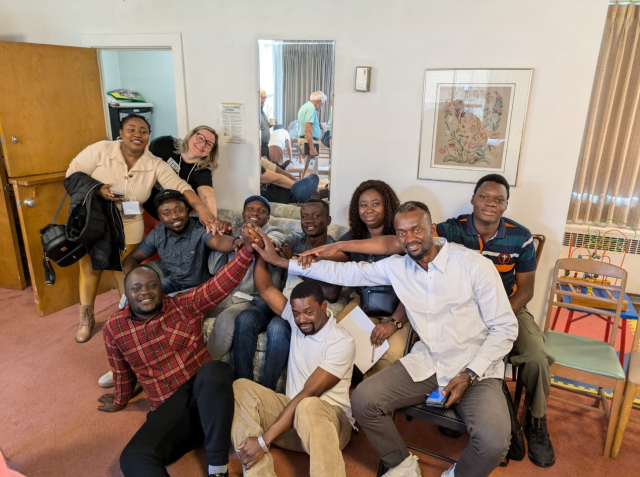
At Kitchissippi United Church, and through communities such as God’s Beloved, a costly and holy truth is being learned. Affirmation is not a slogan. It is a practice. It is the daily embodied decision to recognize the image of God fully alive in people who have been told, both explicitly and subtly, that they do not belong.
In contemporary society, racism is rarely loud. More often, it whispers. It hides in microaggressions, in questions like, “Where are you really from?” and in surprised compliments such as, “You speak so well.” It appears in assumptions about safety, intelligence, leadership, or worth. These acts are called “micro” not because they are small, but because they are repeated. Repetition wounds the soul. Each moment leaves a mark. Each one communicates the same message. You are still on trial.
Jesus consistently noticed the wounds people had learned to hide. Racism does not only harm those who endure it. It also deforms the souls of those who benefit from it. It teaches false innocence, creates distance from suffering, numbs compassion, and whispers, “This is not your problem.”
The gospel refuses that comfort. “If one member suffers, all suffer together.” When even one child of God is denied dignity, the entire family of God is diminished.
The United Church proclaims that God is still speaking. If this is true, then God is still interrupting comfort, unsettling assumptions, and calling the church to listen to voices it would rather ignore. God speaks through stories that make us uncomfortable, through tears that slow us down, and through anger born not of hatred but of love for justice.
Racism will not be healed by good intentions alone. It requires courage, proximity, and truth-telling that costs something. Love is not passive. Love disrupts what harms. Love speaks truth even when that truth fractures cherished illusions.
Scripture ultimately dares to offer not escape, but renewal. “I saw a new heaven and a new earth” is not a promise of replacement, but of restoration. God does not make all things new by ignoring old pain. God makes all things new by entering it. There are tears in Revelation because there have been tears on earth. There is healing because there has been harm. There is restoration because something precious has been stolen.
For this reason, the church cannot rush to hope without first sitting in grief. It cannot sing of heaven while refusing to repair the earth beneath its feet. The promise of new creation calls us to dismantle the old one, the systems that crush, the silences that protect power, and the habits that teach some bodies to dominate while others endure.
The new heaven and the new earth begin wherever dignity is restored, where the image of God is no longer negotiated, and where justice is practiced rather than postponed. Until that day, the faithful walk with tears in their eyes and resolve in their bones, believing that God is already making all things new, and refusing to stand still while heaven waits for earth to change.
This is faith that moves feet.
—Rev. Daniel Addai Fobi is the leader of the God’s Beloved group at Kitchissippi United Church in Ottawa, and an advocate for 2S and LGBTQIA+ people.
Reflection Questions
- Genesis proclaims that every human being bears the image of God, while Revelation offers a vision of renewed creation. Where in your own life or in the life of the church do you see the image of God being diminished, denied, or made conditional through racism or exclusion?
- The reflection names racism not only as an idea or a system, but as a wound carried in bodies, memories, and daily experience. What emotions, assumptions, or discomforts arise for you as you reflect on this reality, and how might God be inviting you to respond differently in posture, speech, or action?
- In the context of racism within the United Church of Canada, what is one concrete step you can commit to that moves beyond good intentions toward justice seeking action? How can your faith take shape in practices that restore dignity, amplify marginalized voices, and resist the temptation to look away?
The views contained within these blogs are personal and do not necessarily reflect those of The United Church of Canada.