
ARI, a Mission and Service partner in rural Japan, demonstrates how to live with respect in Creation
As we celebrate Earth Day today, it gives us a moment not only to lament climate disaster, but also to reflect more deeply on how we might live faithfully and “with respect in Creation,” as it states in our New Creed. It is both a moment of challenge and an opportunity to renew our desire for a world that is healthy, whole, and beautiful.
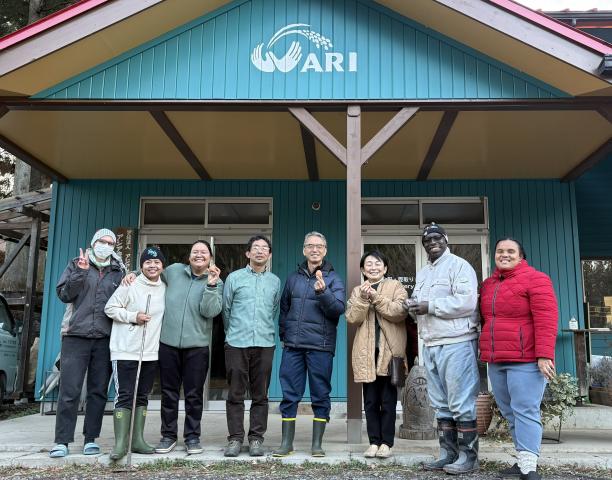
For the Asian Rural Institute (ARI), however, every day is Earth Day. A Mission and Service partner of the United Church of Canada, ARI truly embodies a profound respect for the earth and teaches it to participants from around the world.
Established in 1973, ARI has since trained 1,472 graduates from 63 countries in sustainable agriculture, community development, and servant leadership. Its mission is “to build an environmentally healthy, just, and peaceful world, in which each person can live to his or her fullest potential.” This mission is rooted in the love of Jesus Christ.
ARI was founded as a way to heal and reconcile following the confession of Japanese churches for their complicity with the nation during World War II. From this heart of repentance, it sought to mend relationships—especially with neighbours in Asia who were impacted by the war—and to restore their relationship with the land.
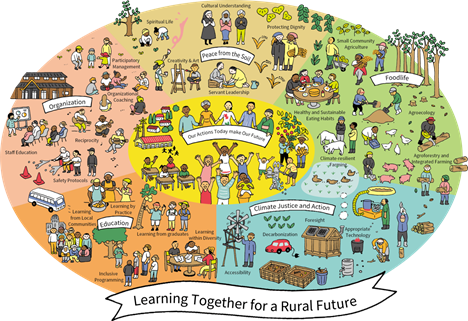
Participants learn to live harmoniously with both the land and one another. They make organic fertilizers and pesticides, and decompose and repurpose food and animal waste. Their work reflects a holistic and organic approach to farming that is gentle on the earth. ARI integrates livestock and vegetable production with forest maintenance to ensure all life can sustain future generations. This forest maintenance method is called "satoyama" in Japanese.
As ARI Director Osamu Arakawa sensei says: "At ARI, we believe that caring for the earth begins with how we grow, share, and consume food together in community. Through our work in the satoyama landscapes, we seek to embody ‘peace from the soil,’ nurturing both the environment and relationships across cultures. In this time of climate crisis, small-scale, sustainable satoyama practices offer a vital path toward ecological justice and reconciliation."
A central pillar of ARI is “servant leadership.” In their chapel, there is a painting of Jesus washing the feet of his disciples, which serves as a model for their philosophy. Participants from around the world are often surprised to see the director of ARI working alongside them in the fields. They find such leadership both refreshing and inspiring. When they return home, many hope to model and teach this humble, Christ-like style of leadership.
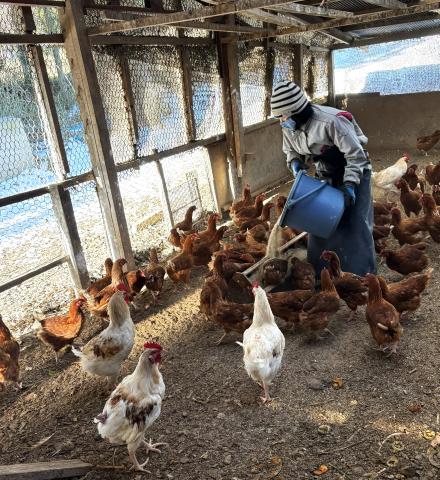
On a visit there earlier this year, I experienced firsthand the 6:30 a.m. morning exercises, followed by work on the farm. I was part of the team that fed the chickens, while others cared for pigs, goats, and vegetables. Afterwards, we shared breakfast, cleaned together, and gathered for morning chapel and a community meeting. I deeply appreciated the sense of togetherness and the intentional work of living with respect for Creation—including livestock, the earth, and one another.
The United Church of Canada is able to partner with this remarkable organization through the support of Mission and Service. By training rural leaders who make a meaningful difference in their communities, ARI truly demonstrates how we are called to live with respect in Creation.
ARI also welcomes volunteers to live, work, and experience community life. For more information, visit their website.
—Rev. Won Hur serves as the Global Partnership Program Coordinator for Asia in the General Council Office, Church in Mission Unit.
The views contained within these blogs are personal and do not necessarily reflect those of The United Church of Canada.