How twelve mothers found connection and possibility together at Morogoro Women’s Training Centre, Tanzania, a United Church global partner
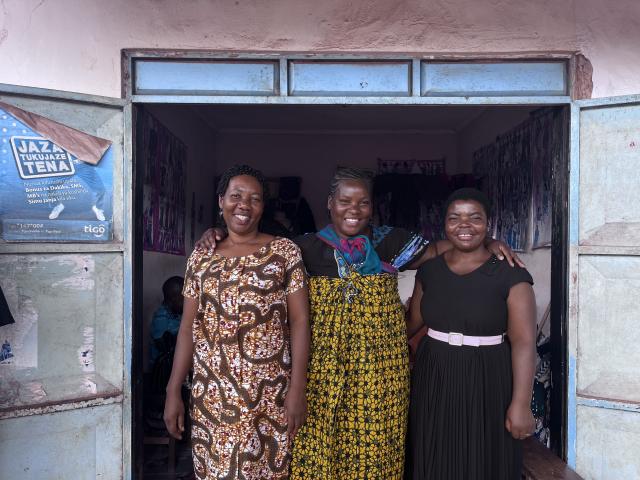
There’s a particular feeling that comes with visiting longtime companions in ministry, a sense of stepping into a story that began long before you arrived and will continue long after you leave. I felt it immediately on my first trip to Tanzania last month. Since 1979, The United Church of Canada has been accompanying the work of the Morogoro Women’s Training Centre (MWTC), a unit of the Christian Council of Tanzania, in Tanzania, supporting their locally-led efforts that empower women.
One of those efforts, run in 2023 with the support of Mission and Service, included a holistic training for mothers of children with disabilities. The program wove together self‑esteem and confidence building, small business and entrepreneurship skills, financial literacy, emotional support, and practical knowledge about caring for children. It was a space where women learned, but also where they were seen, heard, and held by one another.
Many of the women spoke of the ‘before.’ Of years marked by isolation, stigma, and the heaviness of carrying their child’s needs alone. Some described shame that kept them hidden, or fear of being misunderstood by neighbors, their church community, and even family. Their love for their children was unwavering, but the loneliness was real.
What’s grown after their time at MWTC is something far more powerful than what any single training session could offer: they found one another.
They found language for their experiences. They found community where shame once lived, and possibility where isolation once closed in. The relationships they built became an ongoing source of strength.
There were twelve women in the training that week—twelve stories and twelve journeys being strengthened in community. I couldn’t help but notice the echo of another circle of twelve. God has always used small groups of ordinary people to carry hope into the world. These women, too, are bearers of that hope.
Among the twelve, three shared that their husbands had left after their child was born with a disability. It was a quiet grief woven into their stories, shaped by the stigma that still surrounds disability in many communities. In the absence of that support, the women leaned even more on one another, finding in community what had been withdrawn at home.
Two women shared their stories with us as glimpses into the transformation that happens when women gather.
Prisca Ngwira
Prisca entered the training program navigating a complex mix of financial challenges and the uncertainties surrounding her son’s health. She is a mother of two, and her younger son (now eighteen) lives with an intellectual disability that developed after epilepsy altered the course of his childhood. He completed primary school and later learned carpentry at a vocational college, but the journey to get there was not easy.
Before the training, Prisca often felt overwhelmed. Her confidence was low. The emotional weight of caregiving, combined with financial instability, left her feeling stretched thin. Her small business brought in too little to sustain her family, and she lacked the capital to grow it.
During the training, something shifted. Prisca found not only information, but connection. She met other parents who understood the complexities of raising a child with disabilities—the fears, hopes, exhaustion, love. In that shared space, she found her footing again.
She began tailoring and offering small catering services. She learned more about the rights of children with disabilities and how to advocate for her son. With additional capital, she strengthened her business. But perhaps the most meaningful change was internal: her sense of possibility widened.
Prisca now dreams of expanding her tailoring work. She dreams of acquiring sewing machines, fabrics, and the tools she needs to build a more stable income. Her aspirations are practical and hopeful, rooted in the desire to provide for her family and to stand firmly in her role as a mother and advocate.
Agness Mduma
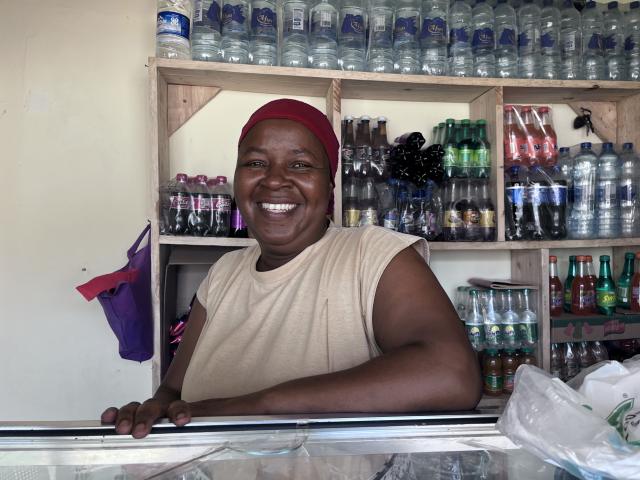
Agness carries a vibrant, steady strength. She is a widowed mother of four, and for sixteen years she has been raising her youngest child, who lives with a disability, largely on her own. When her husband died, that baby was just over a month old. The grief, the responsibility, the uncertainty of how she would provide for her family all arrived at once.
Before she connected with MWTC, life pressed in from every direction. Her income‑generating activities brought in very little. Markets were limited. Opportunities were scarce. And like so many mothers of children with disabilities in Tanzania, she carried the weight of it alone.
The training she received didn’t erase the hardship, but it opened a door. With startup capital and new skills, Agness began selling charcoal, at first in small amounts. She added local chickens and started selling eggs. Then she opened a small grocery shop, and started baking cakes. Each step was modest, but each one widened the circle of possibility.
What struck me most was not the list of businesses she now runs, but the way she spoke about herself. The training gave her tools, but it also strengthened her confidence. She talked about learning to save, to plan, to trust her own decisions. She talked about raising her child with renewed courage.
Her efforts have allowed her to support her children’s education, meet daily needs, and even renovate her home. She is still navigating challenges. Her child’s medical needs are high, and health insurance remains out of reach, but she is no longer standing on unstable ground. Her story is one of resilience unfolding in real time.
These stories are reminders of what accompaniment makes possible. Not quick fixes. Not tidy narratives. But the slow, steady work of walking together. The kind of work that honors dignity, nurtures resilience, and allows women to discover strength in one another.
—Amy Zavitz is Global Partnership Program Coordinator, Africa Partnerships, with The United Church of Canada General Council Office
The views contained within these blogs are personal and do not necessarily reflect those of The United Church of Canada.