
Preparing tomorrow’s pastoral leaders today
See, I am doing a new thing! Now it springs up; do you not perceive it? I am making a way in the wilderness and streams in the wasteland. Isaiah 43:19
As the United Church of Canada moves boldly into our second century, we must equip current and future leaders to serve faithfully and effectively in a rapidly changing ministry landscape. The Reimagining Theological Education project will explore how United Church ministers are called, trained, mentored, and supported throughout their education and careers, while strengthening connections among congregations, theological schools, and denominational partners.
The project is being funded through Lilly Endowment’s Pathways for Tomorrow Initiative, which is designed to help theological schools across Canada and the United States prioritize and respond to the most pressing challenges they face as they prepare pastoral leaders both now and into the future. The project’s work is closely linked to the wider strategic plan of The United Church of Canada, Toward 2035.
Our Schools
Reimaging Theological Education is rooted in collaboration with the theological schools affiliated with The United Church of Canada. Each school has identified initiatives for funding that will foster new pathways for discernment and calling, strengthen the preparation of pastoral leaders, and provide robust lifelong learning and support throughout ministry, with particular attention to those in their first years of service. These initiatives are summarized below.
The Atlantic School of Theology
The Atlantic School of Theology (AST) is helping rethink how future church leaders are trained in Canada through the United Church’s Reimagining Theological Education Project. Building on its strengths in community-based learning, practical ministry experience, and collaboration with different church traditions, AST plans to expand its programs to reach more people and provide stronger support throughout the leadership journey. This includes helping individuals discern a call to ministry, involving congregations more actively in identifying leaders, and offering learning opportunities in local communities across Atlantic Canada.
The project will also strengthen hands-on ministry training, develop new courses in areas such as leadership, anti-racism, and cooperative ministry, and expand flexible learning options. AST aims to make continuing education more accessible, while also providing mentorship, peer support, and resilience-building for new ministers during their first five years of service.
The Centre for Christian Studies
The Centre for Christian Studies (CCS) is proposing a practical plan to strengthen theological education and help address leadership shortages in The United Church of Canada. The plan builds on programs that already work well by expanding CCS’s community-based learning model, making courses more widely available, and allowing students to receive credit for CCS courses at other theological schools. This approach aims to increase access to training and strengthen collaboration between schools.
CCS also plans to create a new ministry learning program that helps new and experienced leaders build practical skills through hands-on learning, reflection, peer support, and feedback. In addition, CCS wants to establish a national discernment network that helps congregations identify, encourage, and support people who may be called to ministry.
Emmanuel College
Emmanuel College proposes several initiatives to strengthen theological education and support future church leaders. A key part of the plan is creating online and in-person learning circles for people in ministry, giving participants opportunities to learn together, share experiences, and build supportive relationships over a nine-month program. The college also plans to enrich its curriculum by emphasizing Indigenous wisdom, ecological sustainability, land-based learning, and spiritual practices. Students will have opportunities to learn from Indigenous elders, scholars, and community leaders while exploring issues such as climate change and its impacts on communities.
The focus is on encouraging a broad range of people to consider ministry, engaging youth, strengthening relationships with regional councils and congregations, and developing tools to identify and nurture future leaders. The college aims to improve its digital presence through updated websites, videos, testimonials, and other storytelling resources highlighting its programs and connecting with the United Church’s values of spirituality, discipleship, and justice.
Montreal Dio
Montreal Dio’s Reimagining Theological Education proposal responds to major changes facing churches in its region. As traditional models of training clergy are becoming harder to sustain, Dio will build on its strengths, including flexible online learning, close relationships with congregations, bilingual programming, and a commitment to serving the church’s changing needs.
Dio’s updated degree programs will prepare students for collaborative ministry and leading change in congregations. Continuing education opportunities for clergy and lay leaders will be expanded through study days, gatherings, and conferences that explore new approaches to ministry. Most significantly, Dio plans to create a community-based formation program led by a dedicated director. Rather than training individuals separately, this program will work with communities of faith, offering accessible learning that reflects local needs and helps congregations grow and lead together.
St Andrew’s College
St. Andrew’s College (SAC) is building on its strength as a Prairie-based theological school focusing on accessible, relationship-based, and practical leadership training. SAC’s Reimagining Theological Education proposal aims to expand learning opportunities for students preparing for ministry and for people already serving in churches. Through partnerships with other theological institutions and its Lifelong Learning Pathway, SAC will offer flexible certificate programs, continuing education, and training for lay leaders and ministry professionals who want to support congregations in different ways.
The college will strengthen its digital ministry resources through podcasts, webinars, and other online learning materials while helping people develop modern communication and digital skills. A Theological Circle of Elders’ Wisdom will bring together scholars, Indigenous leaders, and church leaders to explore important topics such as social justice, Indigenous reconciliation, diversity, leadership, and public theology.
St. Stephen’s College
St. Stephen’s College (SSC) proposes new ways to prepare and support church leaders by focusing on faith communities rather than just individual learners. One key idea is the creation of Community Certificates, where groups of people from the same congregation or faith community learn together, develop leadership skills together, and are assessed as a team. A Faith and Community Leadership program will be available through community certificates, graduate certificates, and a Master of Theological Studies option. These programs will help congregations build leadership capacity, and help individuals explore calls to ministry or strengthen their leadership skills.
To support this work, SSC will establish a Centre for Spirituality and Community Wellness that will provide resources, learning opportunities, and connections for faith communities, especially those with limited or no ministry personnel. The Centre will host podcasts, workshops, public talks, and networking events. SSC’s Reimagining Theological Education proposal also includes hiring a faculty member to lead the initiative and supporting doctoral students conducting research on leadership development and the needs of faith communities.
Sandy-Saulteaux Spiritual Centre
The Reimagining Theological Education proposal by the Sandy-Saulteaux Spiritual Centre (SSSC) is rooted in the Indigenous concept of “Two-Eyed Seeing,” which brings together the strengths of Indigenous and Western ways of knowing. Building on more than 40 years of Indigenous theological education, the proposal emphasizes learning through experience and connection rather than relying only on classroom education, helping leaders grow in ways that are grounded in culture, spirituality, and community.
The proposal also aims to support the United Church’s ongoing work of reconciliation and decolonization by centering Indigenous worldviews, histories, teachings, and spiritual practices. SSSC plans to work collaboratively with other theological schools, sharing knowledge and creating learning opportunities that strengthen Indigenous and intercultural formation across the church.
Vancouver School of Theology
Vancouver School of Theology (VST) is proposing four initiatives to help prepare church leaders for the changing needs of congregations and communities. One initiative expands the “Teaching House That Moves Around,” an Indigenous theological education program bringing learning directly into Indigenous communities rather than requiring students to travel to a school. Another initiative creates a cohort-based learning model that combines online study, in-person gatherings, mentoring, and peer support, helping students feel connected and supported throughout their education.
VST also plans to establish a new Professor of Christian Ethics and Public Theology to help the church engage thoughtfully with important issues such as AI, end-of-life care, social inequality, and environmental responsibility. The school will expand continuing education opportunities through flexible courses, certificates, webinars, and ministry resources that support clergy and lay leaders throughout their careers.
Learn more about how each school is reimagining theological education in the download below.
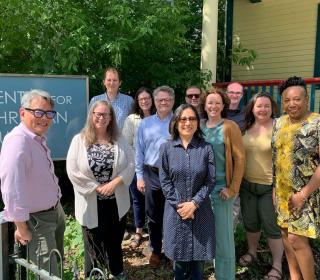
Innovation and Collaboration Ignite “Reimagining Theological Education” Project
A bold new chapter in theological education is underway—driven by collaboration, innovation, and a shared commitment to equipping leaders for a… continue reading
Vancouver School of Theology Receives Major Grant
The Vancouver School of Theology has received a major grant that will establish the Reimagining Theology Project.Downloads
- Reimagining Theological Education Executive Summary (371.21 KB) (PDF)