
Hear Youth Leadership Animators' visions of the United Church of today and tomorrow
Six United Church Youth Leadership Animators have something to share: their hopes, visions, and experiences of and for First-Third ministry in the church.
The Leadership Animator program employs six youth aged 15–21 from across Canada to participate in leadership development, vocational discernment, and church staff placements. The Animators liase with regional councils and local congregations, participate in staff-led workshops and placements, and support event planning and leadership for Collective. Animators also contributed to Divine Creation Does Not Cease, the upcoming United Church 2027 Lent devotional book.
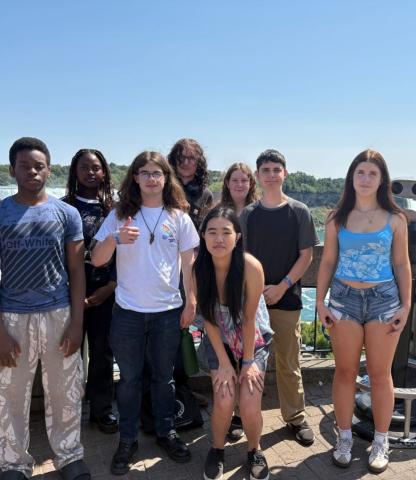
In the above video and below interviews, each Leadership Animator reflects on their experience of being a young person in the church, and the future of First-Third ministry.
What do you think is the role of First-Third Ministry in the Church?
Raven Hubber: First-Third is the United Church ministry to those 30 and under—the bridge between the younger generations and the wider church ecosystem, which often struggle to connect naturally.
Connell Campbell: The first is that it must minister to young people, offering them God’s love and comfort, and the second is that it must be able to continue into the future, and as such perpetuate itself over generations by bringing young people into the church.
What keeps you coming to church as a young person?
Brian Tiriwepi: School and online life can feel super filtered, but church is a space where people show up as themselves. We don't stay for fancy programs or aesthetics. We stay when we feel seen, valued, listened to, and given real space to lead.
T.J. Munikwa: I think wanting a community that understands certain parts [of you] that others may not is a common feeling for a lot of people. As someone who fits into a lot of different groups of people, being Christian is one group that feels a little harder to find community with youth.
Madi Naude: The sense of community and purpose that I find in church keeps bringing me back; it’s a place where I know I belong. It's somewhere I can ask questions, learn, and grow in my faith without needing to have everything figured out.
What is one experience you have or have had in the church that you particularly enjoyed?
T.J. Munikwa: An important thing to me is being in places where different opinions are valued, which is why I think I thought so highly of General Council 45.
Brian Tiriwepi: On a youth retreat, after volunteering all day and moving around, we sat around a Christ candle worshipping and repeating a chorus of one song. I have never felt the Holy Spirit in the room ever, and this was one of the moments I did. It proved to that these moments happen when there's a space for it to happen.
How has the Leadership Animator program helped you engage in leadership in the church?
Rousseau Whitely: Overall, I think this program drastically improved my ability and confidence at speaking in worship, and in all contexts.
Connell Campbell: The program has helped me make connections and reach out to people in the church. The United Church is a fairly old and very complex organization. Knowing who to reach out to in different areas can be hard, making having instruction on it remarkably helpful.
Where do you think the church needs to improve in terms of First-Third Ministry?
Raven Hubber: I think First-Third should work to make themselves more known to the whole of the United Church, offering themselves as a resource to help engage all kinds of youth from all walks of life—both those already engrossed in the church, and young people who are curious and/or questioning their faith.
What do you envision for the future of First-Third Ministry?
Rousseau Whitely: I see more youth-led ministry. I see a large web of smaller groups that form organized structures; small groups that vary greatly in how organic or organized they are, forming connections across the continent. I see dedicated people supporting Christ’s cause into the 21st century.
What do you envision for the future of the church?
Madi Naude: We want it to be honest, willing to listen, and open to having difficult conversations. I hope the church continues to empower young people, not just by inviting them to attend, but by giving them real opportunities to lead, share ideas, and help shape the future.
Brian Tiriwepi: I envision a church that prioritizes action over perfection, and relationships over red tape. I want to see young people given real authority to lead initiatives, run justice projects, and reshape worship spaces. We don't need all the answers, we just need a bold inclusive community that walks alongside us.
To hear more from the Animators, watch the video:
The significant decline in the number of young people involved in the United Church has made it challenging for them to feel confident sharing their voices, ideas, and visions with the wider church. It is crucial to have youth leaders and mentors, and supporters who will listen to young people, encourage their leadership, and help keep their visions alive.
We are incredibly grateful to have the Leadership Animator Program within The United Church of Canada, which represents an important step toward building a strong and hopeful future for the church. We hope that these young leaders’ words will make a lasting impact on the wider church, and inspire change, growth, and investment in young people.
The views contained within these blogs are personal and do not necessarily reflect those of The United Church of Canada.