
Witnessing the history of the Nanjing Massacre with global partner the Amity Foundation, Luke Doiron heard a profound, urgent call to peace
Content warning: This blog contains disturbing details of war crimes, including murder and sexual violence.
This May, myself and a group of three other United Church youth traveled to China to participate in the Young Envoys for Amity and Hope (YEAH) program, run by Amity Foundation, a global partner of the United Church. The program strengthens cooperation with other global partners through youth exchanges focused on issues like environmental awareness and peace advocacy.
On Friday, May 29th, we visited three museums devoted to sharing the tragic history of the Nanjing Massacre, which occurred during the Japanese invasion of China in 1937–1938. The Japanese invaded Nanjing and indiscriminately killed and raped soldiers and civilians alike. Estimates suggest that more than 300,000 Nanjingers were killed.
The day began with a visit to the John Rabe and International Safety Zone Memorial Hall. John Rabe, an employee of the Siemens company working in Nanjing, made it his mission when the invasion started to save as many innocent lives as possible. Rabe established the Nanking Safety Zone with the help of other foreigners, including missionaries. The fact that he was a member of the Nazi Party gave the safety zone some recognition among the Japanese; our guide said that they used Nazi flags to shield civilians in the safety zone from targeted bombing.
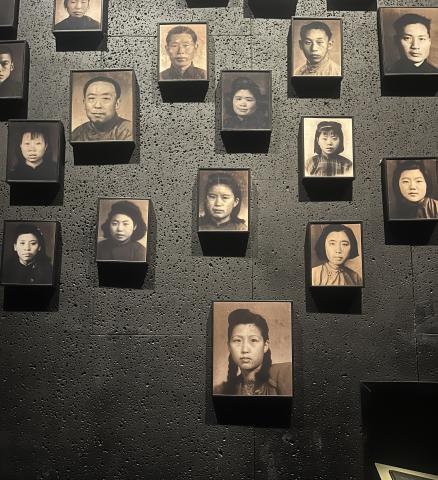
We then visited the Nanjing Lijixiang Comfort Station. Comfort stations were used by the Japanese army to keep sex slaves for Japanese soldiers. This was a very emotional and sorrowful visit, which left all of the delegates, including myself, emotionally drained. There was a statue called Endless Tears that I think summed up the experience perfectly. It depicts the face of a victim who, no matter how many times you wipe away her tears, will continue to cry. This symbolizes that these victims will never be able to forget or fully heal from the horrible experiences they were forced to endure.
A guided tour of the Nanjing Massacre Museum, with its details of the atrocities experienced by the people of Nanjing, was another difficult visit. One portion included witnessing exposed mass grave sites, where we saw the bones of just a small fraction of the deceased. We heard of the atrocious killing matches in which Japanese soldiers participated, where they competed to see who could murder the most victims.
At the end of the day, we returned to the Amity office for a debriefing presentation. It was heartening to hear, after such a day, the message that Nanjing uses the horror of its past as a beacon of hope and peace. It would be easy for its people to feel resentful, but they choose to “forgive, but never forget.”
Events like this, it was explained, need to be remembered to make sure they are not repeated. This applies to the entire world, but, unfortunately, history continues to repeat itself.
In God’s covenant with Moses, God established that the Israelites would take control of the land of Canaan. This was, of course, achieved through war and bloodshed. Jesus challenged this way of thinking leading up to his death; in Matthew 26:52, he says: “Put your sword back in its place... for all those who draw the sword will die by the sword.” Even in Jesus’s darkest hour, he chose peace over war. We are also called to live peacefully through Paul in his letter to the Romans 12:18: “If it is possible, as far as it depends on you, live at peace with everyone.”
Witnessing the unforgettable history of these museums, and reflecting on these scripture readings, we are potently reminded that war is never the answer and that, as people of God, we are called to peace.
—Luke Doiron is a member of Trinity-Clifton United Church in Charlottetown, Prince Edward Island.
The participants of Amity Foundation’s Young Envoys for Amity and Hope are all eager to share their experiences. Please contact to connect with speakers. If this blog piques your interest to participate in people-to-people opportunities with global partners, we invite you to find out more at the People in Partnership webpage or via the above email.
The views contained within these blogs are personal and do not necessarily reflect those of The United Church of Canada.