
As wildfires devastated surrounding communities, Rev. Keri Wehlander saw the best in people emerge in Penticton, B.C. to help
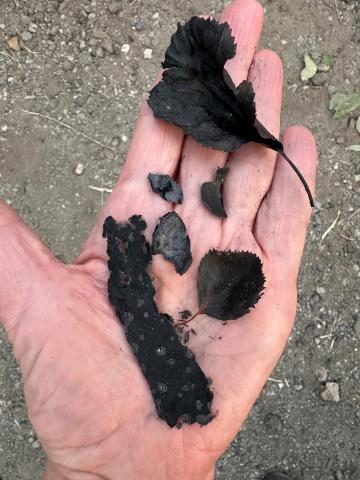
When life-threatening fire arrives in a place you have made into home, climate change is no longer an abstract concept. It is strange to be part of fleeting international news headlines. These events will stay with you for years to come, but will changes that need to occur also take place?
The first indication of trouble was a text from my partner: “Did you see the smoke plume across the lake before you left the house?” I hadn’t.
Soon, a wall of black smoke divided the sky; the first emergency alert blasted on my phone. We were not in immediate danger in Penticton, but an incredibly dangerous situation was unfolding across the lake. The fire exploded to 5,000 hectares in its first three hours. Ashes and particulates were falling from the sky. Everything felt apocalyptic.
The next emergency alert came around 3:00 a.m. The entire town of Summerland was to evacuate. Shortly thereafter, the phone rang: could a group of evacuees sleep at the church? We then heard acquaintances of ours were sleeping in their car with two cats. Did we have room for them? Of course.
Oasis United Church in Penticton—where I serve as minister—has a weekly Food Cupboard program that gives out food, clothing and other essentials. I began to spread the word so evacuees would know to come for what they needed. I invited Rev. Anne Ellis of Summerland United Church and her congregation, who had been evacuated, to join us on Sunday. Members of Oasis volunteered to make lunch so that we could eat together.
"Rebecca Solnit has observed that when disasters occur, we learn about who we can be as human beings. That is obvious in this moment."
20,000 residents had been evacuated in neighbouring areas, and Penticton—a city of barely 40,000 people—became the primary sanctuary. Parking lots in front of stores filled up with RVs. Messages asking for help appeared on social media. I drove to the Trade and Convention Centre, where evacuees were registering.
The chaos there was matched by great kindness from every person trying to reach out and help. People were carrying crates with their pets; dogs walked alongside their families. A man sat outside with seven goats. Parents, visibly shocked, were trying to console their children. Volunteers were doing their best to answer questions. People with food and clothes were finding someone to offer them to.
Later that day, another emergency alert blasted over our phones. Now a section of Penticton was under emergency alert. Meanwhile, the air kept getting smokier and ash kept raining down.
People had completely lost their homes, including someone in our own community, and a farmer who has generously supported our Food Cupboard. I wondered how we could help him—and what the impact on our ability to give out fresh produce to those facing food insecurity would be. I scanned social media photos, for friends from Summerland visiting family in another province, to see if their house still stood. One friend had fought the fire in their area, and said he had never seen anything like it: it was like a war zone, with explosions everywhere and power lines falling to the ground.
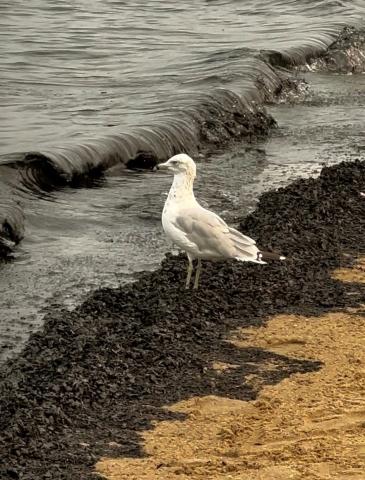
But people kept stepping up. The Sikh temple cooked hot meals and offered them every day. Local Syilx leaders invited us to join in a prayer ceremony. A new message board appeared for people to post what they needed or could offer. Businesses offered meals, vets treated pets, and pet stores offered pet food, all for free. Naramata Centre, a United Church learning centre, cancelled their summer programming so evacuees would have a place to stay. A local school became an air-conditioned comfort centre with showers, food, and space for children to play. I even saw a lemonade stand set up by children to benefit evacuees.
Rebecca Solnit has observed that when disasters occur, we learn about who we can be as human beings. That is obvious in this moment. We can be kind to one another. We can watch out for one another. We can come together and find a good path forward.
As I write this, the fire is still out of control and burning at 20,000 hectares. Forecasters are warning that dry lightning may come our way. With the drought conditions here, the possibility of more fires being sparked is very high. This is what climate crisis looks like.
What do we need? Your prayers, certainly. Financial support will be needed to help rebuild. Above all, we need you to know that no one is immune from this kind of situation.
This fire is a teacher for all of us, revealing what we are creating in our world. It helps us see the best and the worst of ourselves. Can we name the truth that a small group of people seek to enrich themselves at the expense of life on this earth? Even so, can we cultivate enough hope to believe that our efforts still matter? In the crisis we are in locally, I don’t see people throwing up their hands in despair. They are arriving with clothes, food, compassion, and hope.
I think often now of one of Linnea Good’s hymns: “How then shall I live?” drawn from Ezekiel 33:10. How then, shall we live, together?
The simple answer is that we show up for one another, even while ashes rain down on us.
—Rev. Keri Wehlander is the minister of Oasis United Church in Penticton, British Columbia. She is also an author, hymn lyricist, and spiritual director.
The views contained within these blogs are personal and do not necessarily reflect those of The United Church of Canada.